Mining costs are rising fast. Every mine manager wants to save money on chemicals, Reagents like collectors and frothers are expensive. In copper flotation, these costs can hurt your profits? heavy use of chemicals is not always better. Sometimes it is waste. We are SBM, a global expert in mining equipment. We know how to fix this. The secret is often not in the chemical tank. It is in the crusher.
This article explains how to cut costs. We look at equipment settings. We look at rock size. We share real data from mines. You will learn to optimize your plant. Let us reduce your operating costs today.
Many mines use too much dosage. Why does this happen. It is usually because of particle size. If rocks are ground too fine, they are called slimes. Slimes have a huge surface area. They absorb chemicals like a sponge? This wastes your money. If rocks are too big, minerals are locked inside. The bubble cannot lift them. You lose copper.
The balance is delicate. You need the “Liberation Size”. This is the perfect size where copper is free. For most porphyry copper, this is 75 to 150 microns. According to Minerals Engineering journal, controlling P80 (80% passing size) is key. If P80 fluctuates, operators add more reagent “just in case”. Stability saves money.
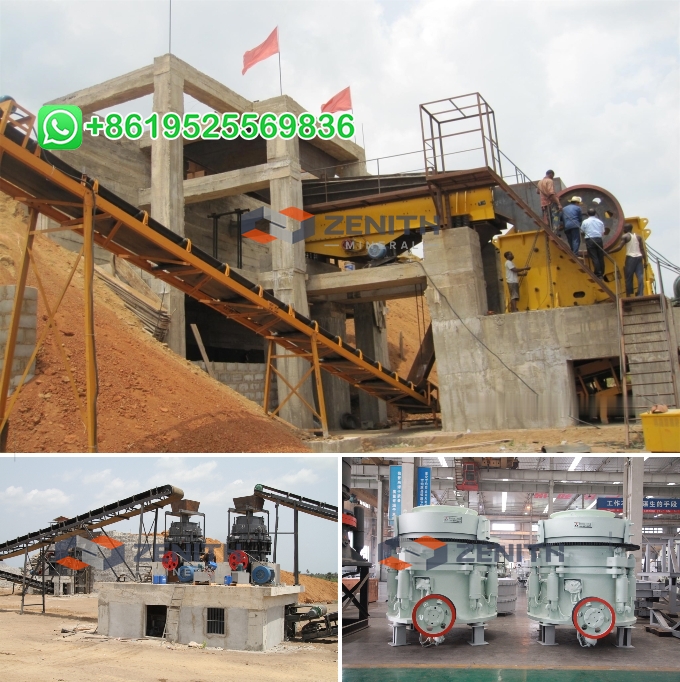
Crushing is cheaper than grinding. This is a famous rule. We use SBM HP Series Cone Crushers to help you. The principle is “Laminated Crushing”. This means rocks crush rocks. It creates a better shape. It creates fewer slimes. Less slimes means less reagent absorption later.
Key Tech Specs:
– CSS (Closed Side Setting): This sets the gap at the bottom. We automate this.
– Eccentric Speed: High speed means more hits per rock.
– Motor Power: Matched for hard copper ore.
Why do we use hydraulic adjustment? It keeps the CSS constant. If the liner wears out, the system adjusts. The output size stays the same. This stability is vital for flotation.
The machine itself matters. Old machines have dead spots. Reagents settle there and do nothing? SBM flotation cells use forced air. The impeller spins to mix slurry and air. The bubble size must be small. Small bubbles carry more copper.
We look at the “Hydrodynamics”. This is fluid movement. If the flow is too fast, bubbles break. If it is too slow, solids sink. We optimize the stator design. This lowers power use. It also spreads reagents evenly. You use less chemical for the same result. It is smart engineering.
| Circuit Type | P80 Size (microns) | Slime Content (<10um) | Xanthate Dosage (g/t) |
|---|---|---|---|
| Traditional Jaw + Standard Cone | 180 | 12% | 65 |
| SBM HP Series Cone Circuit | 150 | 7% | 42 |
| High Pressure Grinding Rolls | 130 | 15% | 58 |
Background: A copper mine in the Andes. Altitude is 4200 meters. The air is thin. The rock is hard porphyry. Bond Work Index is 16 kWh/t. They used old crushers. The product was irregular. Reagent cost was $1.20 per ton. This was too high.
The SBM Solution: We installed HP500 Cone Crushers. We set the CSS to 12mm. We used a closed circuit with vibrating screens. Equipment List: – 1x Jaw Crusher PE900x1200 – 2x HP500 Cone Crusher – 2x SBM Ball Mill 3645
The Result: The feed to the ball mill became finer. But it had less “ultra-fines”. The flotation feed was uniform. Reagent use dropped. Data: – Xanthate reduced by 30%. – Recovery rate went up 2%. – Client Feedback: “The stability is amazing. We just watch the screen. SBM saved us millions.”
You must measure. Do not guess. Here is a simple way to check. 1. Measure the feed grade (Head Grade). 2. Measure the tailing grade (Waste). 3. Track the daily reagent liters.
Formula: Consumption (g/t) = Total Reagent (g) / Tons of Ore (t). Make a chart. Plot g/t against Recovery %. You will find a “Plateau”. Adding more chemical does not help. Stop there. Many operators go past this point. We teach your team to find this spot. It is a decision tree process.
Background: This project had mixed ore. Oxide and Sulfide. Oxides are hard to float. They consume lots of sulphidizer. The climate is hot and dusty? The previous machines overheated. Production stopped often.
The SBM Solution: We focused on “Scrubbing”. We used SBM washing drums before crushing. We removed sticky clays. Clays eat reagents. Process: 1. Feed entering SBM Washing Drum. 2. Clean rock goes to SBM HST Cone Crusher. 3. Flotation uses specific sulfidizing agents.
The Result: Removing clay reduced acid consumption. Data: – Acid consumption down 40%. – Maintenance cycle extended from 2 weeks to 6 weeks. – Energy cost reduced by 15%.
Broken machines make bad product. If a crusher liner is worn, the gap opens. Big rocks go to the mill. The mill works harder. It makes slimes. Reagent costs go up. SBM Guarantee: Our machines have sensors. They tell you when to change parts. Easy Access: We design for humans. You can change parts fast. Less downtime means steady process. Steady process means steady chemical dosing.
Why do we care about wear? Because wear changes geometry. Changed geometry changes physics. Physics changes chemistry. It is all linked.
| Parameter | Range | Why it Matters |
|---|---|---|
| Air Flow Rate | 0.5 – 1.5 m³/min | Controls bubble density |
| Impeller Speed | 6 – 9 m/s | Keeps solids suspended |
| Froth Depth | 50 – 300 mm | Controls grade vs recovery |
To cut chemical bills, look upstream. Fix the crushing first. SBM crushers give the right size. This lets the flotation cell work well. Selection Guide: – Hard Rock: Use SBM HP Series. – Soft/Clay Rock: Use washing then SBM HST Series. – Large Capacity: Use SBM HPT Series.
Invest in good iron. It saves on liquids. The ROI is usually under 8 months. This is based on chemical savings alone? Contact SBM for a site audit.
Q1: Can changing a crusher really lower chemical cost? A: Yes. It is about particle surface area. Uniform crushing reduces “slimes”. Slimes absorb chemicals wastefully. SBM crushers reduce slimes.
Q2: What is the best bubble size for copper? A: usually 1mm to 2mm is best. If bubbles are too big they drop the mineral. SBM impellers make fine bubbles.
Q3: Do you support installation in remote areas? A: Yes we do. SBM has teams globally. We send engineers to install. We train your staff. We ensure the machine runs perfect. You are never alone.
Copyright © ,ZENITH MINERALS CO.,LTD.

 whatsapp
  Online Chat 24 hours online
 Online Chat