River stones are hard. They are tough materials. Making sand from them is profitable. However it is also difficult. The silica content is high. This causes heavy wear on machines. Choosing the right crusher is vital. You need the right plan. If you choose wrong, costs go up. Profits will go down. This guide helps you choose correctly. It uses data and experience. We refer to ZENITH equipment standards. We also look at industry journals. Let’s start.
River stone is smooth. It is also very hard. The Mohs hardness is usually 7. This is high. The main problem is silica. Silica content can be 80%. This is abrasive. It acts like sandpaper on steel. Standard crushers fail quickly. The liners wear out fast. You lose money on parts. Therefore we need specific machines.
According to the Journal of Mining Science, wear rates increase with silica. High silica means high cost. We must balance power and wear. We need high reduction ratios. But we also need durability. ZENITH engineers study this often. They found a solution. The solution is lamination crushing. We also use impact crushing for shaping.
You need a system. One machine is not enough. Usually, we use three stages. Primary, secondary, and tertiary. Let us look at the machines.
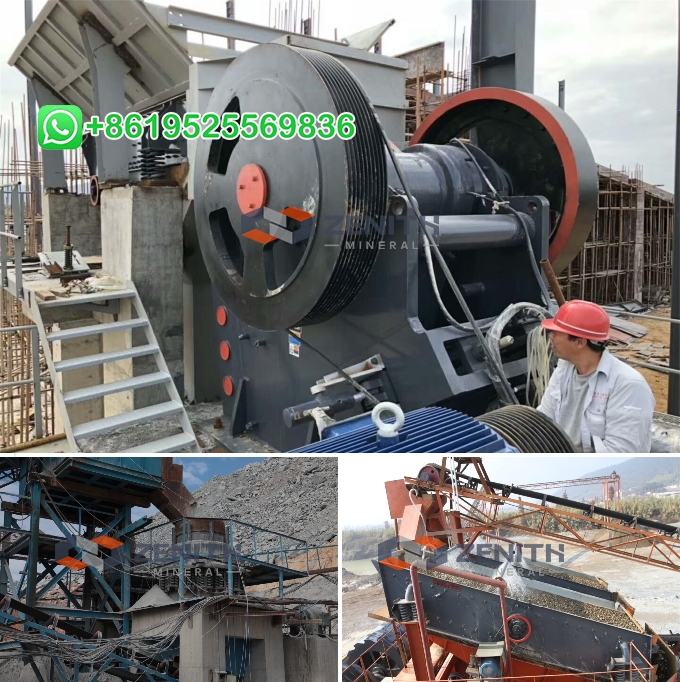
The Jaw Crusher is the first step. It handles big rocks. The principle is simple. It uses “squeezing” pressure. A moving jaw plate presses rock against a fixed plate. The motor drives a flywheel. The eccentric shaft moves the jaw.
Key Parameters:
This is crucial for river stone. You should not use an Impact Crusher here. Impact crushers wear too fast on river stone. The Cone Crusher is better. It uses “lamination crushing.”
Principle: The mantle spins inside a concave. It crushes rock between rock. This saves the metal liners. The ZENITH HST or HPT series are examples. They use hydraulic pressure.
Key Data:
This makes the sand. VSI means Vertical Shaft Impact. The principle is “Stone hitting Stone.”
Mechanism: Rocks fall into a spinner. The spinner throws them out. They hit other rocks. They break along natural lines. This makes a cube shape.
Why? Construction needs cubic sand. Needle shapes are bad. VSI fixes the shape.
We need data to decide. Look at this table. It compares machines for river stone. This data comes from site tests. It is reliable.
| Equipment Type | Feed Size (mm) | Output Size (mm) | Wear Cost ($/ton) | Suitability |
|---|---|---|---|---|
| Jaw Crusher | < 600 | 100 – 200 | Low (0.05) | Essential |
| Impact Crusher | < 300 | 0 – 40 | Very High (0.35+) | Avoid |
| Cone Crusher | < 250 | 0 – 50 | Medium (0.15) | Recommended |
| VSI Maker | < 40 | 0 – 5 | Medium (0.18) | Essential |
This is a common question. It happens often. You are likely using an Impact Crusher (PF series) as secondary. This is wrong for river stone. River stone is too abrasive. The blow bars cannot handle it.
Solution: Switch to a Cone Crusher. Specifically, a Multi-cylinder Hydraulic Cone. The ZENITH HPT series is good. It uses inter-particle crushing. The rocks crush each other. The metal touches less rock. Liner life extends. It can go from 3 days to 2 months. This saves huge money.
Maybe you only use a Cone Crusher. A Cone Crusher makes flat particles. These are “flakey.” Concrete needs cubes. Flakey sand makes weak concrete.
Solution: Add a VSI machine. You do not need to crush everything. Just run the material through a VSI for shaping. It knocks off the sharp edges. It increases bulk density. The sand becomes Grade A. The selling price increases.
Let us look at a real site. This proves the theory.
Project Background:
The Challenge: The customer used a hammer crusher before. Hammers broke daily. Production stopped often. He was losing profit. He asked ZENITH for help.
The Solution Design:
We changed the flow. We used a three-stage design.
Operational Data:
Customer Feedback: “The ZENITH HPT cone is strong. We saved 40% on parts cost. The sand quality is the best in the region. We supply the airport project now.”
Here is another example. The climate is different. The rock is similar.
Project Details:
Process Upgrade:
ZENITH engineers analyzed the site. The voltage was unstable. We installed soft starters. We used the HST Single Cylinder Cone. It has a smart control system. It adjusts the CSS automatically.
Result: Even with power spikes the machine runs. The automation keeps the chamber full. A full chamber crushes better. This is called “choke feeding.” Production rose 15%. The customer was happy.
Do not just look at the price tag. Look at the “Total Cost of Ownership.”
Initial Cost: Cone crushers cost more than Impactors. Maybe 30% more.
Operating Cost: Cone crushers are cheaper to run. They use less metal parts.
Calculation: If you save $0.20 per ton. And you produce 1,000,000 tons. You save $200,000. The extra machine cost is paid back fast. Usually in 6 months. Therefore ZENITH recommends quality machines. It is an investment. Not an expense.
Good machines need good care. River stone dust is bad. It damages bearings.
Installation Tips:
Maintenance Plan:
Q1: Can I use a Hammer Crusher for river stone?
A: No. It is not recommended. River stone is too hard. Hammers will break very fast. You will stop every day to weld. It is a bad choice for long term.
Q2: How much fines (powder) will be produced?
A: It depends on the machine. A VSI produces more fines. Usually 10-15%. However this stone powder is useful. It can be used in asphalt mixing. You can control the speed to reduce fines.
Q3: What is the power requirement for a 100tph line?
A: Roughly you need 180kW to 220kW. This includes conveyors. ZENITH can calculate the exact load for you. We ensure your transformer is big enough.
Choosing a crusher is science. For river stone remember these rules.
ZENITH has the experience. We have the data. We have the cases. If you follow this guide you will succeed. Your plant will run smooth. Your profits will grow.
Copyright © ,ZENITH MINERALS CO.,LTD.

 whatsapp
  Online Chat 24 hours online
 Online Chat