Copper is vital. We use it everywhere. But getting copper from rock is hard work. It takes strong machines. This process is called crushing. We break big rocks into small stones. It happens in stages. We call them primary and secondary stages. I will explain how this works. I will share my experience. We will look at ZENITH machines. This guide helps you choose right.
Copper ore starts as big rocks. They come from the mine. They are too big to process. We must shrink them. This is comminution. It prepares ore for grinding. Grinding separates the metal. Crushing is the first step. It is dry mostly. We use mechanical force. We squeeze the rock. We hit the rock.
The goal is a specific size. This is the P80 value. It means 80% passes a screen size. For copper, we aim for 12mm or less usually. This makes the ball mill happy. It saves energy later. Crushing is cheaper than grinding. So, we crush more. We grind less. This is the golden rule.
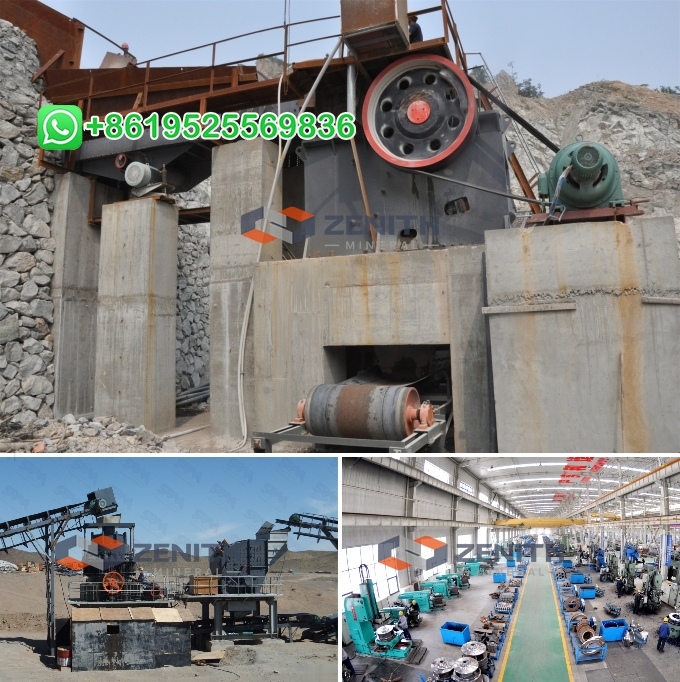
The first stage is rough. Rocks are huge here. They can be 1 meter wide. We use a Jaw Crusher. It is like a giant mouth. It has two plates. One moves. One stays still. The rock falls in between. The moving plate smashes it. We call this compression crushing.
Why use it? It handles high impact. It takes big feed sizes. It is simple to fix.
Key Tech Specs:
1. Reduction Ratio: Usually 3:1 to 5:1. It reduces size fast.
2. CSS (Closed Side Setting): This is the bottom gap. It decides output size. For copper, maybe 100mm.
3. Toggle Plate: It drives the jaw. It is also a fuse. If metal enters, it breaks. This saves the machine.
Reference standard: We follow Taggart’s Handbook concepts here. The angle of nip is key. It must be 18-22 degrees. If bigger, rock pops out.
Many clients ask this. It costs money. Liners are expensive. The answer is often feed method. Are you choke feeding? You should. The chamber must be full. Rock crushes rock. This is “stone on stone”. If it is empty, rock rubs the metal. This rubbing eats the steel. It is abrasive wear.
Solution:
1. Use a heavy-duty apron feeder.
2. Keep the level high.
3. Check the Mn% in steel. Soft rock needs 14% Manganese. Hard copper ore needs 18-21% Manganese.
The rock is smaller now. Maybe 150mm size. It goes to the secondary stage. Here we use Cone Crushers. ZENITH makes great ones. The HST series is popular. It uses a mantle and concave. The mantle spins. It wobbles. It squeezes rock against the wall. This is continuous crushing.
Why use it? It makes cubic shapes. It has high throughput. It is efficient.
Key Parameters:
1. Eccentric Throw: The distance the head moves. Bigger throw means more capacity.
2. Speed: Faster speed makes finer product. It increases power draw.
3. OSS (Open Side Setting): The biggest gap. It affects intake capacity.
| Parameter | Primary (Jaw) | Secondary (Cone) |
|---|---|---|
| Feed Size (mm) | < 750 | < 180 |
| Output Size (mm) | 100 – 150 | 15 – 40 |
| Reduction Ratio | 4:1 | 5:1 |
| Motor Power (kW) | 110 – 160 | 250 – 315 |
| Wear Life (Hours) | 400 – 600 | 300 – 500 |
Sometimes stones look like needles. They are flat. This is flaky. Ball mills hate flaky rock. It floats. It does not grind well. Why does this happen? The reduction ratio is too big. You crush too much at once. Or the cavity is wrong.
Solution:
1. Check the crushing cavity. Is it Standard or Short Head? Short head is for fine crushing.
2. Keep the crusher full. Choke feed is vital for cones too.
3. Adjust the CSS. Close it tight. But watch the power amp meter.
I remember a project in Peru. Altitude was 4200m. The air is thin. Motors get hot fast. Cooling is bad. The rock was hard porphyry copper. Bond Work Index was 16 kWh/t. That is very hard.
Equipment List:
1. ZENITH PE-1000×1200 Jaw Crusher.
2. ZENITH HST-315 Single Cylinder Cone.
The Pain Point: The client had old machines. They stopped often. Bearings failed. Dust was bad. Production was 200 tph. They wanted 350 tph.
Our Design: We upsized the motors. We used insulation class H. We added air coolers to the lube station. We changed the jaw liner profile to “heavy corrugated”.
Result: Output hit 360 tph. Downtime dropped 40%. The client manager, Mr. Luis, said: “The ZENITH cone is a beast. It just eats the rock. We sleep better now.”
Let’s look at the data. The Peru site had moisture issues. Rain season is long. Wet ore sticks. Sticky ore blocks the crusher. We call this “packing”.
Steps we took:
1. Measured moisture. It was 6%.
2. Calculated chamber volume. We needed more space.
3. Adjusted the throw. We increased it to shake mud loose.
This is technical decision making. You must measure first. Then you act. Always check the flow sheet. Do not guess.
Good machines need good homes. Foundation is key. It absorbs vibration. Concrete must be cured well. For maintenance, check oil daily. Oil is blood. If oil is dirty, crusher dies.
Weekly List:
1. Tighten wedge bolts on the jaw.
2. Check accumulator pressure on the cone.
3. Inspect the belt tension.
Do this and machine lasts years. Ignore it and it breaks in months. It is simple logic.
Power is money. Mining uses lots of power. How to save? Do not run empty. An empty crusher still uses 40% power. This wastes money. Automation helps.
Solution:
1. Install level sensors. We use ultrasonic sensors.
2. Link feeder speed to crusher amp. If amp is low, speed up feeder.
3. Use ZENITH smart control cabinet. It does this automatically.
Not all copper is hard. In Zambia, we saw oxide copper. It is softer. It is crumbly. Hardness f=8. But it has clay. Clay is the enemy.
We used a different setup. We used a ZENITH C6X Jaw. It has a big stroke. It cleans itself better. For secondary, we used a Spring Cone. It is cheaper. It handles soft rock well.
Customer Voice: “The C6X does not choke. The clay passes through. Our maintenance cost is low.” This client saved 20% on initial investment. They did not need the expensive hydraulic cone. We chose the right tool. We did not oversell.
Journals like Minerals Engineering support this. They say fine crushing saves grinding energy. They prove the “More Crushing, Less Grinding” theory. Our data matches this. We test rocks in our lab. We check the crushability index. We do not guess.
We have 30 years experience. But we still test. Every mine is different. One setting does not fit all. You need data. You need a decision tree.
Primary and secondary stages are partners. The jaw does the heavy lifting. The cone does the shaping. They must match. If jaw is too big, cone chokes. If jaw is too small, cone starves.
My advice:
1. Test your rock first.
2. Know your moisture level.
3. Choose ZENITH for support.
We are here to help. We solve pain points. We crush rock efficient.
Copyright © ,ZENITH MINERALS CO.,LTD.

 whatsapp
  Online Chat 24 hours online
 Online Chat