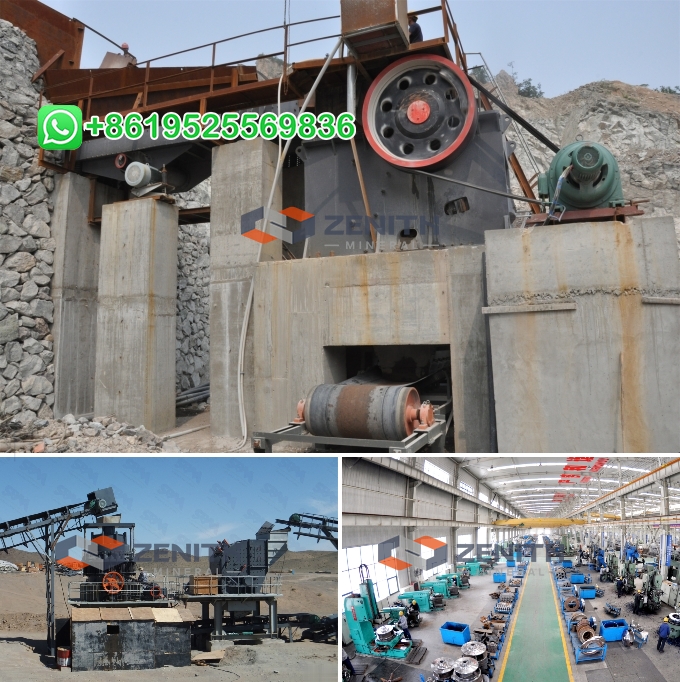
Starting a mining business is a big step. Many investors look at the 100 TPH (Tons Per Hour) plant. It is a golden size. It is not too big and not too small. It fits medium quarries perfectly. But, costs are tricky. You need to know where the money goes. This guide explains the tech and the costs. We use data from mining journals to help you. We want you to win in this business.
A 100 TPH plant is efficient. It balances output with investment. According to the SME Mining Engineering Handbook efficiency drops if plants are too small. This size ensures good ROI. It is easy to manage for new teams. You do not need huge land. The power use is moderate too. It is flexible.
Key Benefits:
Why do we say this? Because starting small helps you learn. You can scale up after profit comes in.
The first machine is the Jaw Crusher. It is the mouth of the plant. For 100 TPH we often use the PE series. The model PE600x900 is very common. It works by squeezing rocks. A moving plate pushes rock against a fixed plate. This is the “toggle” action.
Technical Focus:
Why use a Jaw Crusher first? It handles the biggest raw stones. It protects the finer crushers down the line.
After the jaw you need a second crusher. You have two choices. Cone Crusher or Impact Crusher. This depends on rock hardness. If rock is hard like granite use a Cone. If rock is soft like limestone use an Impact Crusher.
Cone Crusher Details:
Impact Crusher Details:
We often recommend ZENITH cone crushers for hard rock. They last longer. This saves money on parts later, maintenance is key.
You need to know the numbers. Here is a table for a typical 100 TPH setup. These are average figures from field tests. We use standard motor sizes.
| Equipment Type | Model | Power (kW) | CSS Range (mm) | Max Feed (mm) |
|---|---|---|---|---|
| Jaw Crusher | PE600x900 | 75 | 65-160 | 500 |
| Cone Crusher | HPC220 | 220 | 13-38 | 190 |
| Vibrating Screen | 3YK1860 | 22 | N/A | N/A |
Why look at these numbers? To match your electric supply. If your transformer is small the plant wont start.
Let us look at a real job. A client in Indonesia wanted to crush river stone. River stone is very hard. It has high silica. He wanted 100 tons every hour. He also needed good shape for concrete. The climate was wet and rainy.
The ZENITH Solution:
The client was happy. He said “The installation was fast. The cone crusher does not break even with hard stone.” The plant runs 10 hours a day. The ROI was reached in 8 months. Why did it work? Because we matched the CSS correctly to his stone size.
This is a big headache. Many bosses ask this. Usually it is the material. If rock has silica it is abrasive. It eats metal like sandpaper. Or the feed is wrong. If you feed too little rock the machine rubs on itself.
The Fix:
Why keep it full? Rock crushing rock is better than metal crushing rock. It saves your liners.
Concrete buyers hate flat stones. They want cubes. Flat stones break easily in roads. If your pile has too many “needles” you lose money. This happens often with old Jaw crushers. It also happens if the reduction ratio is too big.
The Fix:
Why does this help? Lamination crushing breaks stones along natural cracks. This makes nice cubes.
Do not just look at the price tag. The setup cost has many parts. You must calculate OpEx (Operating Expense). Fuel and electricity cost more than the machine over 5 years. This is a fact.
Cost Breakdown:
Why plan this? So you do not run out of cash before starting. Always keep a buffer budget.
Installation scares people. It looks hard. But ZENITH sends engineers. We guide the workers. The base must be flat. The belts must be tight. If the belt is loose you lose power.
Maintenance Cycle:
Why check daily? Small problems become big disasters. A $10 seal can save a $50000 bearing.
Q1: Can I use a generator for power?
Yes you can. Diesel generators are common in remote mines. But diesel is expensive. Grid power is cheaper if available. You need a genset around 250-300 kW for a 100 TPH plant.
Q2: How much land do I need?
For 100 TPH you do not need much. A flat area of 30 meters by 15 meters is usually enough for the machines. You need more space for stock piles though. Trucks need room to turn.
Q3: How long does it take to build?
Once equipment arrives it is fast. Civil work takes 2 weeks. Installation takes about 1-2 weeks. Commissioning takes 3 days. You can run in one month total.
A 100 TPH plant is a smart start. It minimizes risk. It provides steady cash flow. The key is the right design. Do not buy cheap fakes. They break and stop your job. Trust ZENITH quality.
Decision Tree:
Why follow this? Because physics does not lie. The right tool makes the job easy.
Copyright © ,ZENITH MINERALS CO.,LTD.

 whatsapp
  Online Chat 24 hours online
 Online Chat