Copper is vital for modern life. It is in phones cars and wires. But getting copper from rock is hard work. The rock has little copper inside. Maybe 0.5% or 1%. You need a good process to get it out. This process is called flotation. This guide tells you how it works. We use simple words. We show real data. We show how ZENITH equipment helps mines get more copper. This article is for mine bosses and workers.
Flotation is like a magic trick. It separates good mineral from bad rock. It uses water and bubbles. It uses chemicals too.
The principle is simple. Some minerals like water. We call them hydrophilic. Some minerals hate water. We call them hydrophobic. Copper minerals usually hate water. We put chemicals in. The copper sticks to air bubbles. The bubbles float up. The waste rock sinks.
Why do we do this? It is cheap. It handles lots of tons per hour. It works on fine powder. It is the standard way to mine copper sulfides.
You cannot float a big rock. You must break it. We call this comminution. The rock comes from the mine. It is big. Maybe 500mm or 1000mm.
We use a Jaw Crusher first. ZENITH makes the PE series. It is strong. It squeezes the rock. The fixed jaw stays still. The movable jaw moves. It breaks stone to 150mm.
Key Parameter: CSS and OSS
CSS is Closed Side Setting. This is the smallest gap at the bottom. It decides the product size. OSS is Open Side Setting. This is the biggest gap. Why do we care? If CSS is too small, the machine jams. If too big, rocks stay big.
Jaw Crusher Specs (ZENITH PE-900×1200)
| Parameter | Value | Why it matters |
|---|---|---|
| Feed Size | 750 mm | Accepts big blasted rocks |
| CSS Range | 95-165 mm | Controls output size |
| Motor Power | 110 kW | Provides crushing force |
| Capacity | 220-450 t/h | Matches mine speed |
The rocks are still too big. We need them smaller. We use a Cone Crusher next. The ZENITH HPT series is good here. It uses hydraulic pressure.
The mantle spins inside. It crushes rock against the bowl liner. The speed is high. The crushing ratio is big. We want rocks smaller than 15mm.
Why Hydraulics?
Sometimes iron enters the machine. This is bad. Hydraulics let the iron pass. It protects the machine. The ZENITH HPT clears the cavity fast. This reduces downtime.
Crushers break rock. Mills make powder. We use a Ball Mill. It is a big drum. It spins. Inside are steel balls.
The balls fall on the rock. They smash it. We need a size of 200 mesh. This is like . This exposes the copper mineral. If the copper is hidden inside rock bubbles cannot grab it.
Critical Data:
Ball load is key. If too low grinding is slow. If too high power is wasted. ZENITH engineers calculate this perfectly. We check the Work Index (Wi). Hard rock needs more power.
This is a big pain point. Many bosses ask this. You lose money if recovery is low.
Reason 1: Bad Grind Size
If particles are too big they sink. Bubbles cannot lift them. If too small they turn to slime. Slime covers bubbles.
Reason 2: Wrong pH
Chemicals work at specific pH. Usually copper needs pH 9 to 11. We add lime. ZENITH automation checks pH always.
Reason 3: Old Machines
Old cells have bad mixing. The bottom fills with sand. ZENITH cells have U-shaped tanks. They keep solids moving.
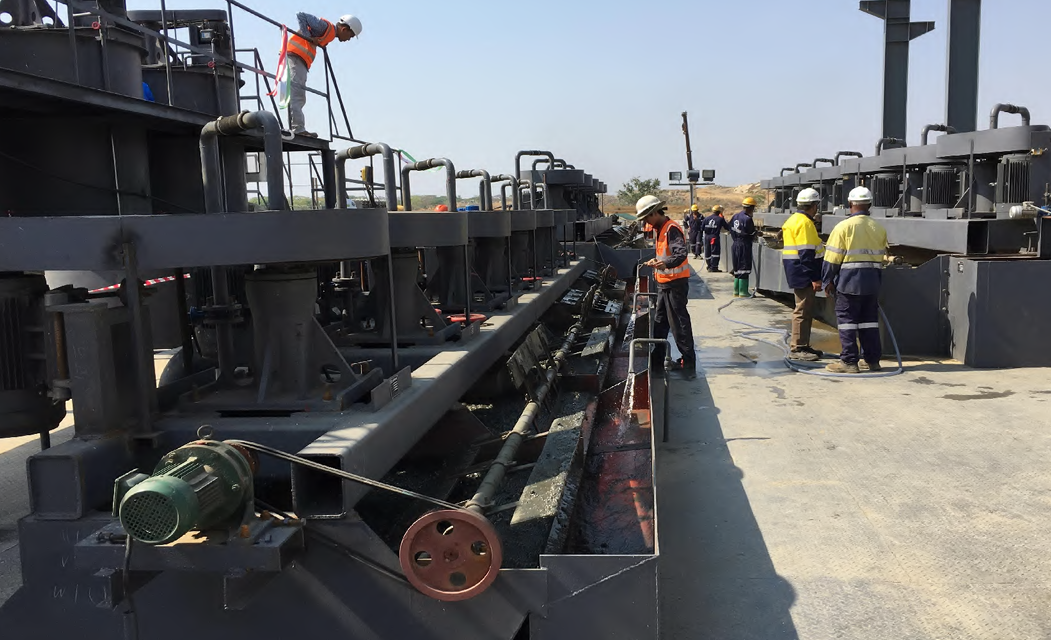
The machine is the heart. ZENITH makes the XCF and KYF series. They are mechanical agitation cells.
Structure:
It has a tank. It has a rotor (impeller). It has a stator. The motor spins the rotor.
How it works:
The rotor spins fast. It sucks air down the shaft. It chops air into small bubbles. It mixes bubbles with slurry. The stator directs the flow. It stops the soup from just spinning.
Energy Data:
ZENITH machines save power. The rotor design is special. It lowers resistance. Energy use is down 15% compared to old styles.
| Model | Volume (m3) | Impeller Speed (r/min) | Power (kW) |
|---|---|---|---|
| SF-4 | 4 | 300 | 15 |
| SF-8 | 8 | 290 | 30 |
| XCF-16 | 16 | 250 | 45 |
Chemicals are expensive. Collectors cost money. Frothers cost money.
The Solution: Precision Dosing.
Don’t just dump chemicals. Use a dosing pump. ZENITH sets up smart dosing. We measure the feed grade. If feed is rich we add more. If feed is poor we add less.
Regrind the Middlings:
Do not throw away middlings. These are half-good rocks. Send them back. Grind them again. This saves chemicals on new feed.
This project was tough. It was in the Andes. Altitude 4000 meters. Air is thin. Motors get hot. The rock was very hard granite.
Project Details:
The client used ZENITH equipment.
Equipment: 1x C6X Jaw Crusher, 2x HST Cone Crushers, 6x SF-16 Flotation Cells.
The Challenge:
Old crushers broke often. The CSS would drift. The copper grade was only 0.6%. They needed 24% concentrate.
The Result:
ZENITH HST Cones held the CSS tight. The hydraulic pressure stayed constant. The particle size became uniform.
Customer Voice:
“The ZENITH team came here. They froze in the cold. But they fixed the circuit. Our recovery went from 82% to 88%. The maintenance time dropped by 30%. The cones just run.”
This mine had a problem. The ore had much clay. Clay is bad. It makes mud.
The Solution:
We changed the circuit. We used ZENITH XCF cells. They have strong mixing. They can handle heavy slurry.
Data Evidence:
We added a desliming stage. We utilized cyclones.
Feed Grade: 1.2% Cu.
Concentrate Grade: 28% Cu.
Recovery: 91%.
The client was happy. The ROI was 6 months.
You buy good machines. You must treat them well. ZENITH supports you here.
Installation:
Foundation must be flat. Use a laser level. If the cell tilts the froth flows one way. This is bad.
Maintenance Checklist:
1. Check V-belts every week. Loose belts slip. You lose RPM.
2. Grease the bearings. Use high temp grease.
3. Check the impeller wear. If edges are round bubbles get big. Big bubbles are bad.
4. Keep the launder clean. Sticky froth blocks pipes.
Copper flotation is science. But it is also art. You need the right tools.
Selection Steps:
1. Test your ore. Know the hardness.
2. Choose a crusher with easy CSS adjustment. ZENITH HST is best.
3. Match the cell size to the flow. Don’t buy too big.
Good machines make money. Bad machines burn money. ZENITH offers reliability. We have parts. We have engineers.
1. How long do wearing parts last?
It depends on rock hardness. Usually jaw plates last 3-6 months. Flotation impellers last 12 months. ZENITH uses high manganese steel. It lasts longer.
2. Can one machine handle all copper types?
No. Oxide copper needs different chemicals. Sulfide copper is easier. You must test the ore first.
3. Why is the froth level unstable?
Check the air valve. Check the level controller. Sometimes the feed rate changes too fast. An automatic control system fixes this.
Copyright © ,ZENITH MINERALS CO.,LTD.

 whatsapp
  Online Chat 24 hours online
 Online Chat